
"Eşik / Threshold'' (back side), punch needle embroidery on unbleached cotton fabric, 150 x 200 cm, edition 1/1, 2025. 4.5. Antalya Architecture Biennial, curated by Celal Abdi Güzer, Antalya Battery Factory, Photo: Kaan Güneri
Threshold is a large-scale punch embroidery work that reads the flow of modern urban life through a cross-section severed by the COVID-19 pandemic. Rendered in an isometric perspective, the composition visualizes this abrupt halt; architectural forms suddenly bisect, dissolving into abstract threads, marking a clear moment of rupture.
The use of this traditional, labor-intensive craft reinforces the work's conceptual foundation. The act of punch embroidery requires a repetitive, physical stitching process that reproduces the felt states of deceleration and endurance experienced during the pandemic's lockdowns. In this tactile archive, each individual loop acts as a tangible record—a unique somatic trace of that specific, collective time.
The work's inherent double-sided nature offers two opposing, yet interconnected narratives: the defined, legible order of the obverse, with its clear isometric logic, and the chaotic, messy, and hidden knots of the reverse. This intentional binary creates a visual dialogue between public perception and private, hidden realities, revealing the underlying tension of a society in isolation.
This duality embodies the collective state of being suspended in an indeterminate moment—neither fully returned to the past nor completely adapted to the new reality. Threshold stands not merely as an abstract urban landscape, but as an embodied tactile archive; a record of collective memory, preserving a specific rupture and a transitionary state of being within the fibers of a woven trace, monumentalizing the quiet labor of endurance.
The interior is rendered as an abstract blueprint. Capturing the sudden dislocation of the pandemic era—a domestic landscape floating on a previously unexperienced plane of reality.


In-progress view of the 'Threshold' installation. The image captures the manual transfer of the axonometric technical drawing onto the textile surface via the punch needle technique.


Decoupled documentation of the textile surfaces. The image highlights the structural duality of the punch needle technique: the graphic definition of the backing (above) contrasted with the tactile density of the looped surface (below).

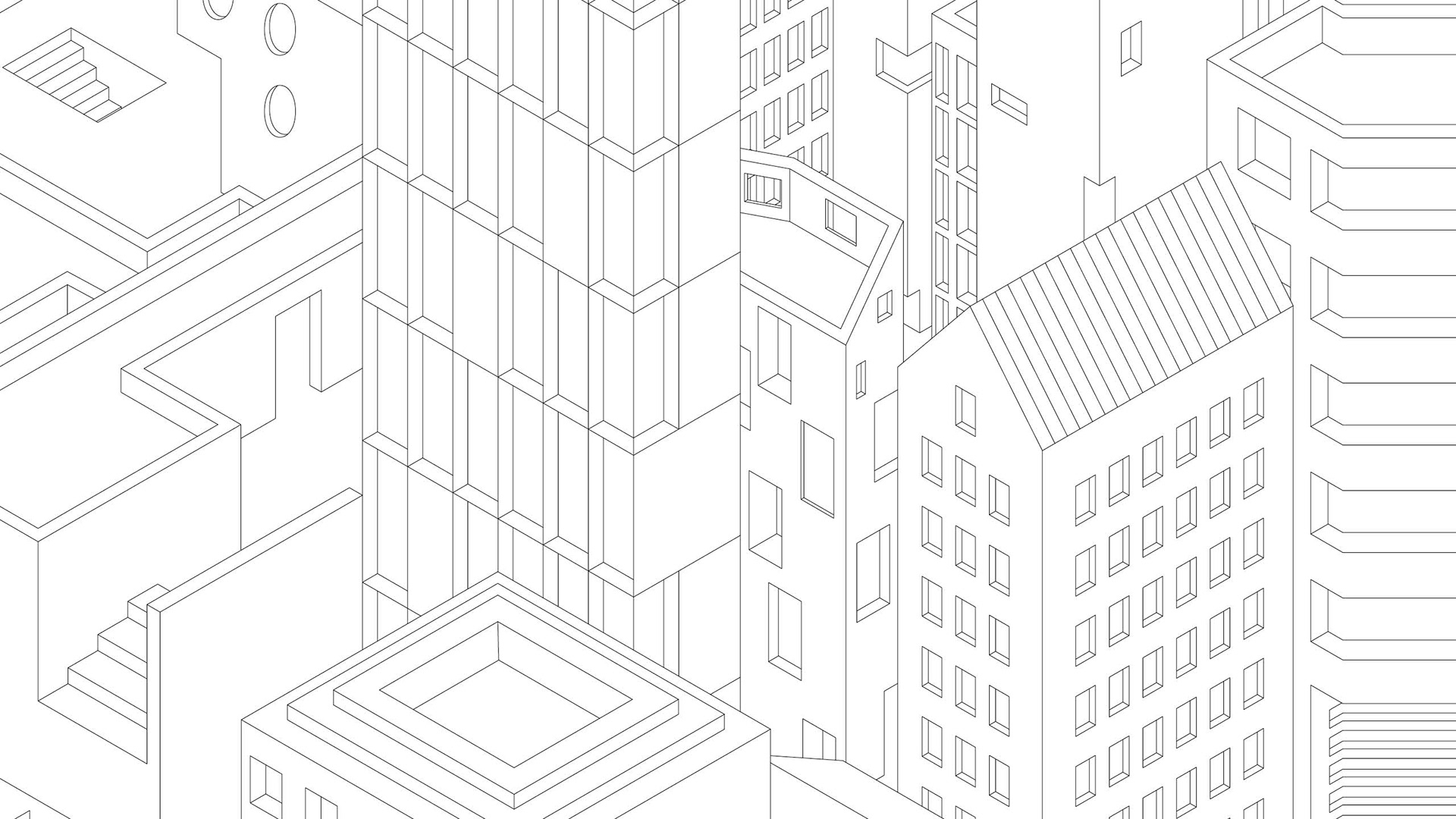
The exact same spatial reality expressed through two fundamentally different mediums. On the bottom, a rigid, mathematically perfect digital isometric drawing; on the top, its tactile, hand-embroidered counterpart on raw canvas. The digital line becomes a physical volume.
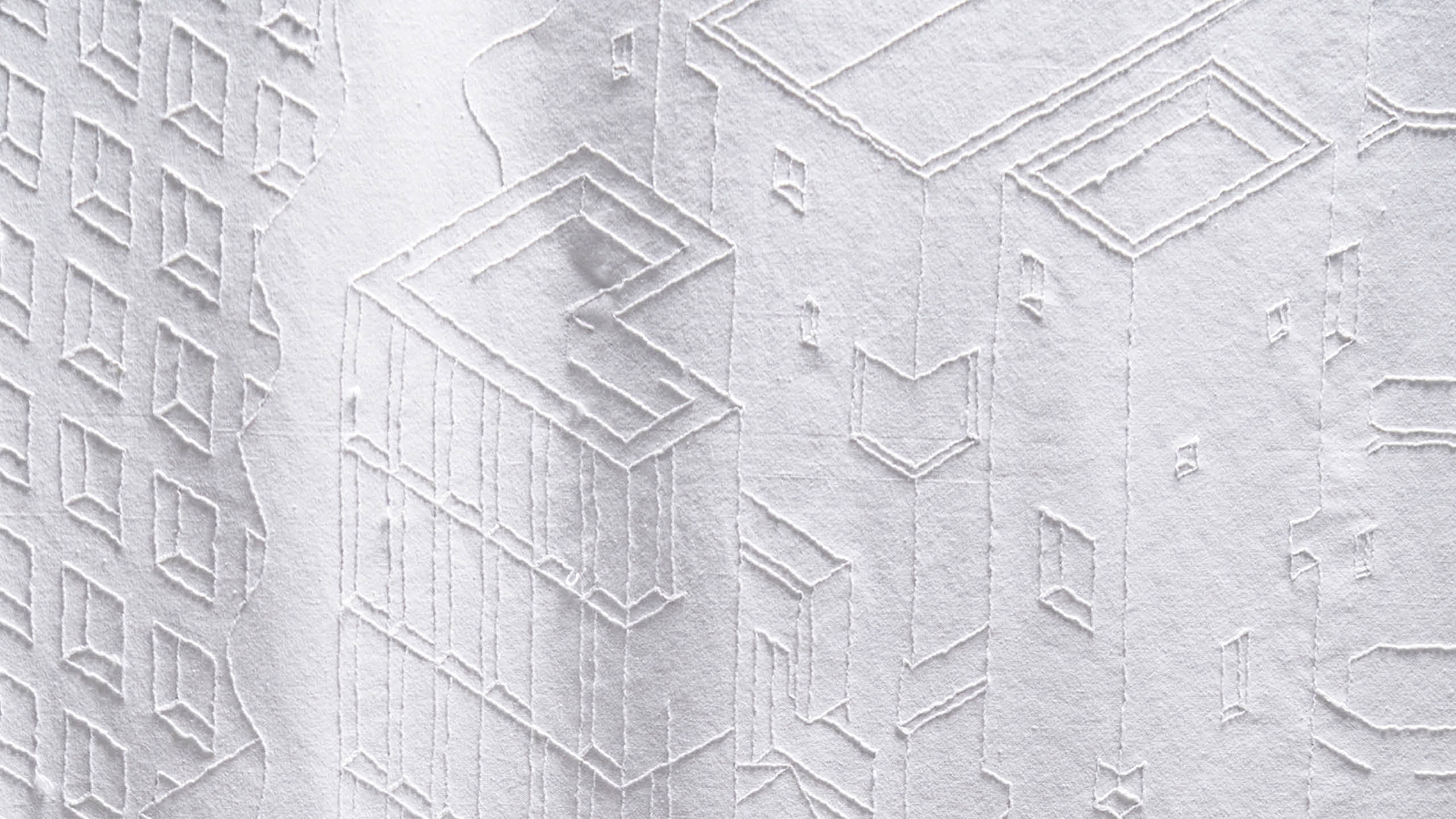
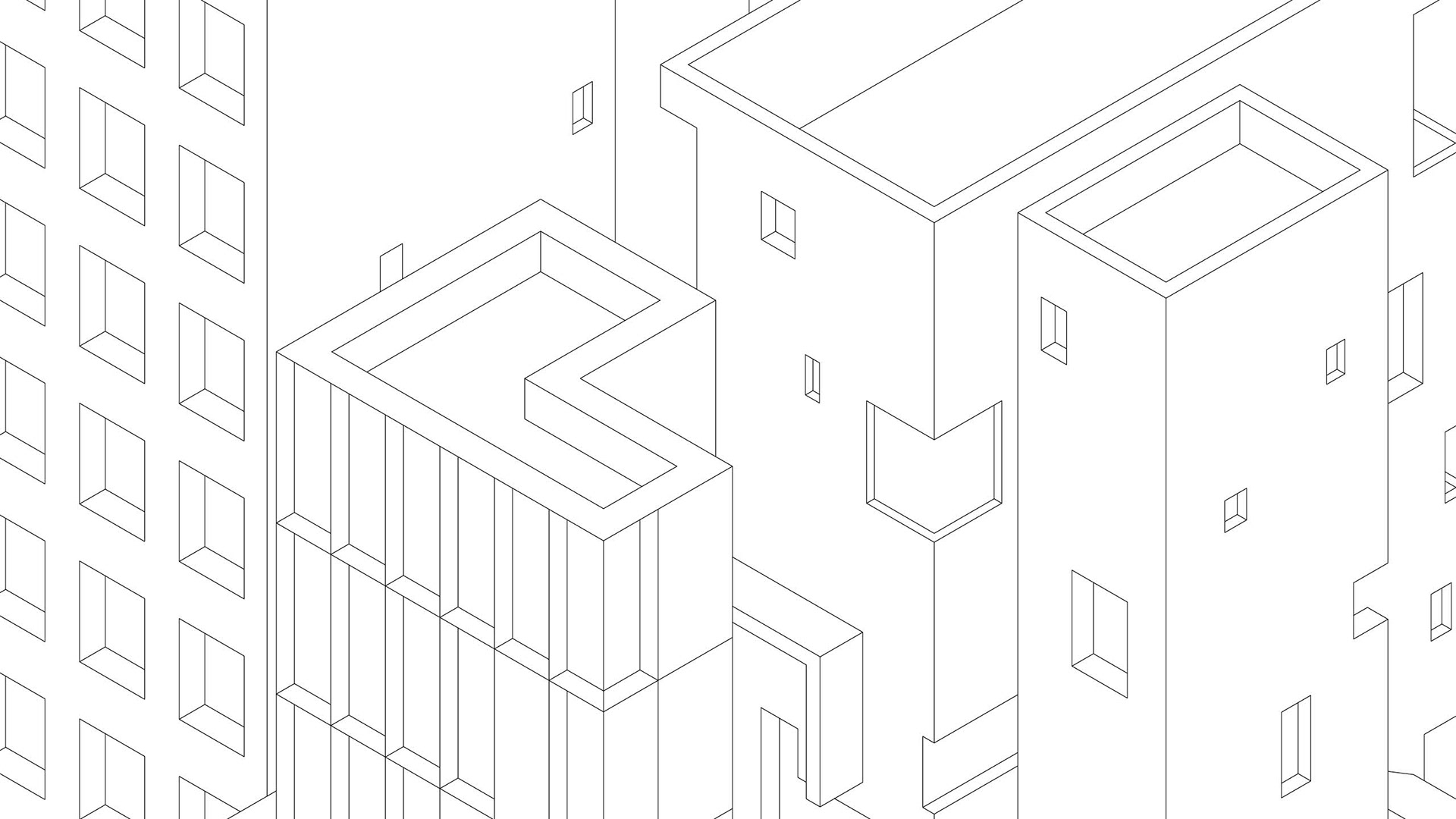
As the scale shifts, the perception of the space alters. The physical tension, texture, and subtle shadows of the thread replace the cold precision of the digital vector. The medium forces the architectural data to become organic.
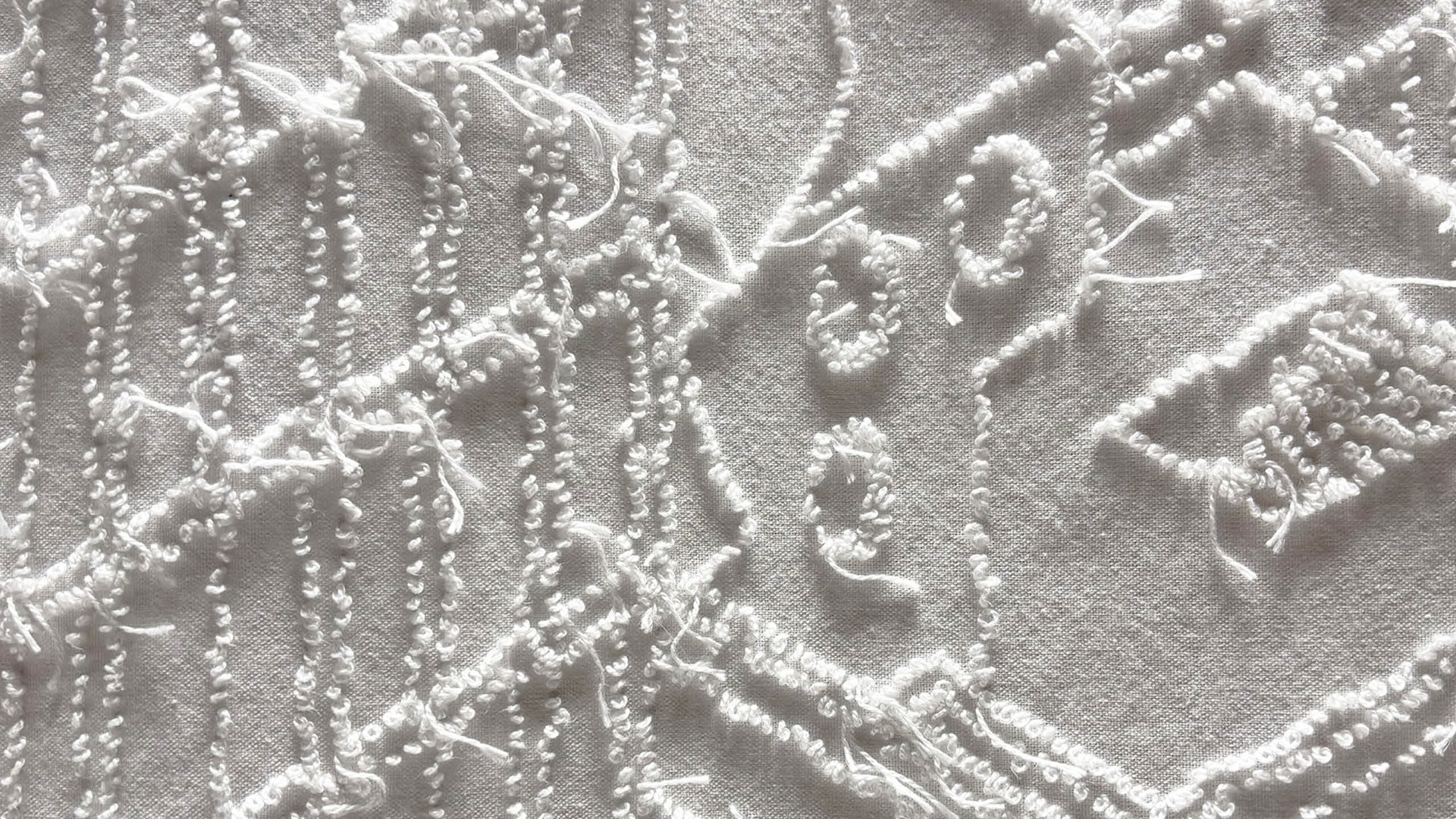

Revealing the reverse side of the embroidery exposes an unintended landscape. While the digital wireframe remains predictably clean and infinite, the back of the canvas constructs a chaotic, organic topography—an alternative reality born entirely from the process of making.

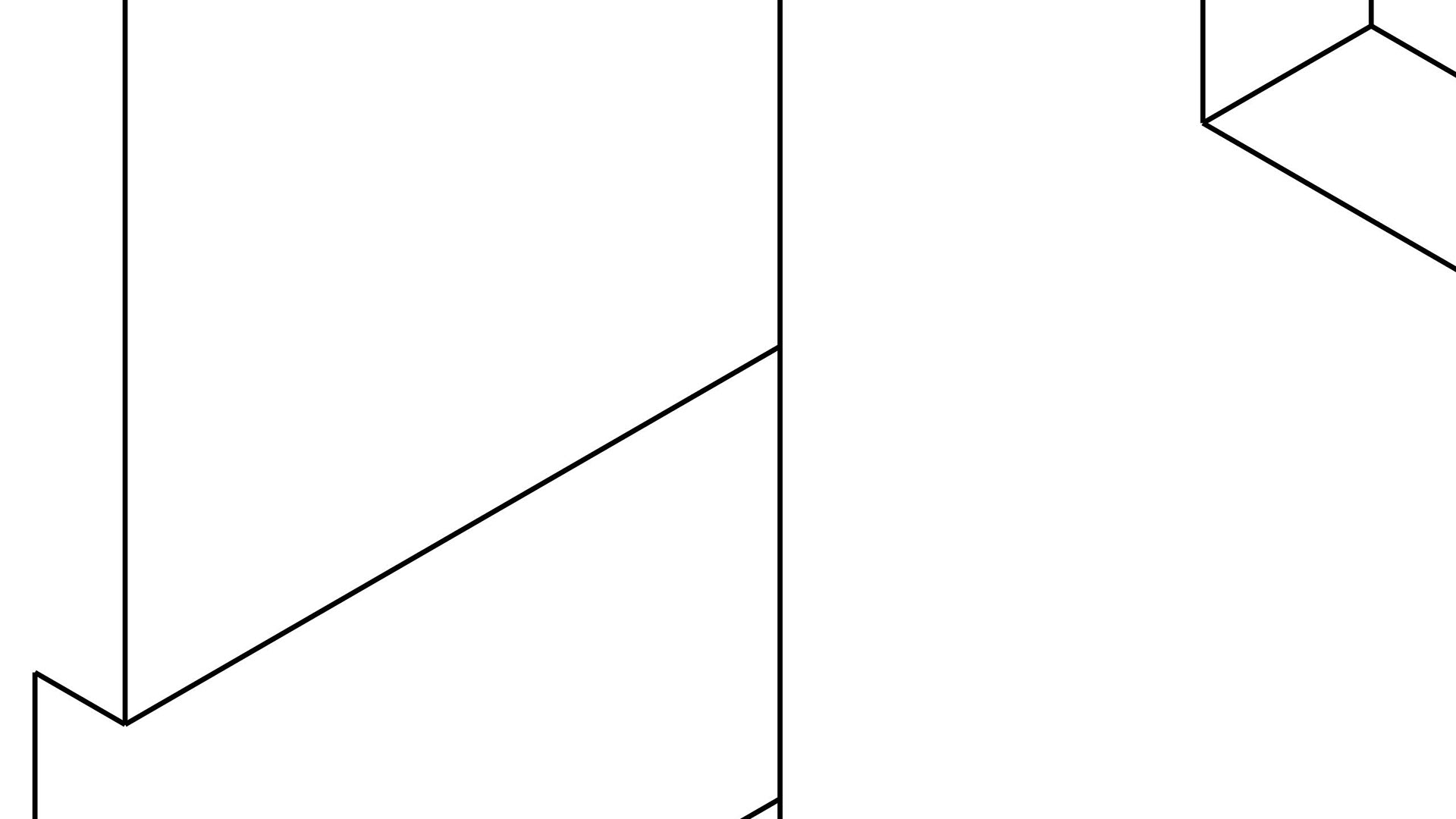
At the micro-scale, the illusion of the single line breaks down. What exists as a weightless geometric boundary on the screen becomes a raw, knotted record of time and physical labor on the fabric. The messy reality of human production confronts digital perfection.