
"Hatıralar / Memories'' (front side), punch needle embroidery on unbleached cotton fabric, 210 x 217 cm, edition 1/1, 2025. Lokal 02 Group Exhibition, curated by Melike Bayık, Eldem Art Space, Eskişehir, Photo: Esra Eldem
Memories explores personal memory through the intersection of architecture and handcraft. Using a minimal line language, the series translates fleeting sketches on paper into permanent, tactile records on fabric. The visual language merges analytical architectural thinking with the organic nature of embroidery.
Here, the red thread clarifies vague mental images while simultaneously anonymizing them. By detaching figures and spaces from their original context, they transform into universal symbols. This abstraction allows the viewer to connect with similar images within their own memory.
The slow, repetitive production process mirrors the act of remembering itself. Much like replaying a thought, every stitch fixes that memory further onto the surface. This "tactile memory" presents traces of the past not just as visuals, but as physical experiences.
Constructed as a spatial narrative, the series forms a layered archive of singular stories. Whether presented as suspended panels or fixed inventories, Memories invites the viewer to wander through a mental map, establishing a dialogue between the artist's records and their own recollections.
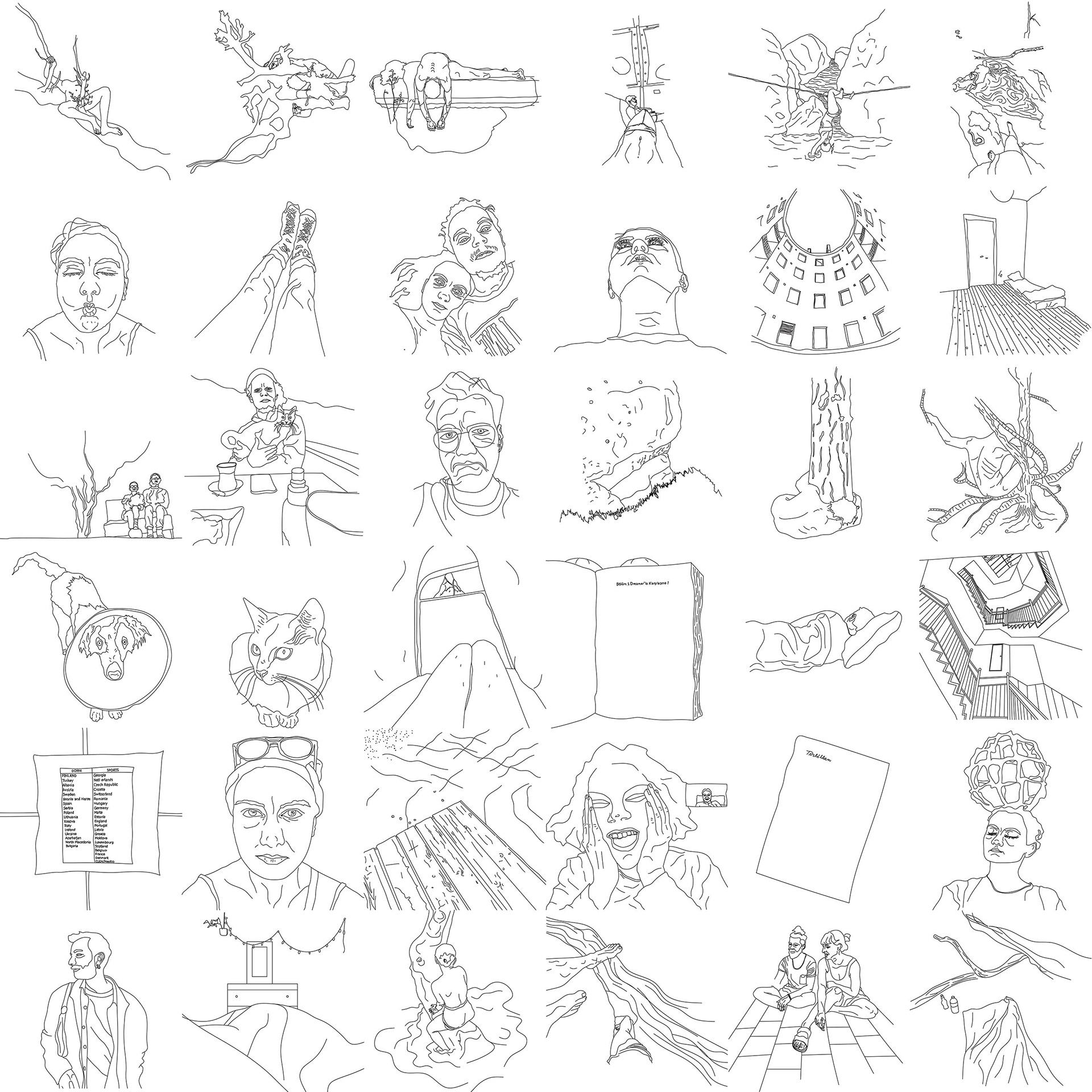
An archive of spatial and bodily memories. Complex personal narratives, everyday spaces, and physical interactions—from rock climbing to domestic corners—are reduced to pure, minimal lines. A visual catalog where memory is stripped of its original context and reconstructed as essential geometry.

Work in progress: The transition from the drawn sketch to the physical thread. A momentary glimpse into the making process, showing the tension of the raw canvas and the slow, tactile reconstruction of a memory.

Beyond the flat surface of paper, the fabric offers sculptural possibilities. As the raw canvas folds and drapes, isolated memories physically intermingle and collide. The linear archive collapses into an entangled topography of moments.
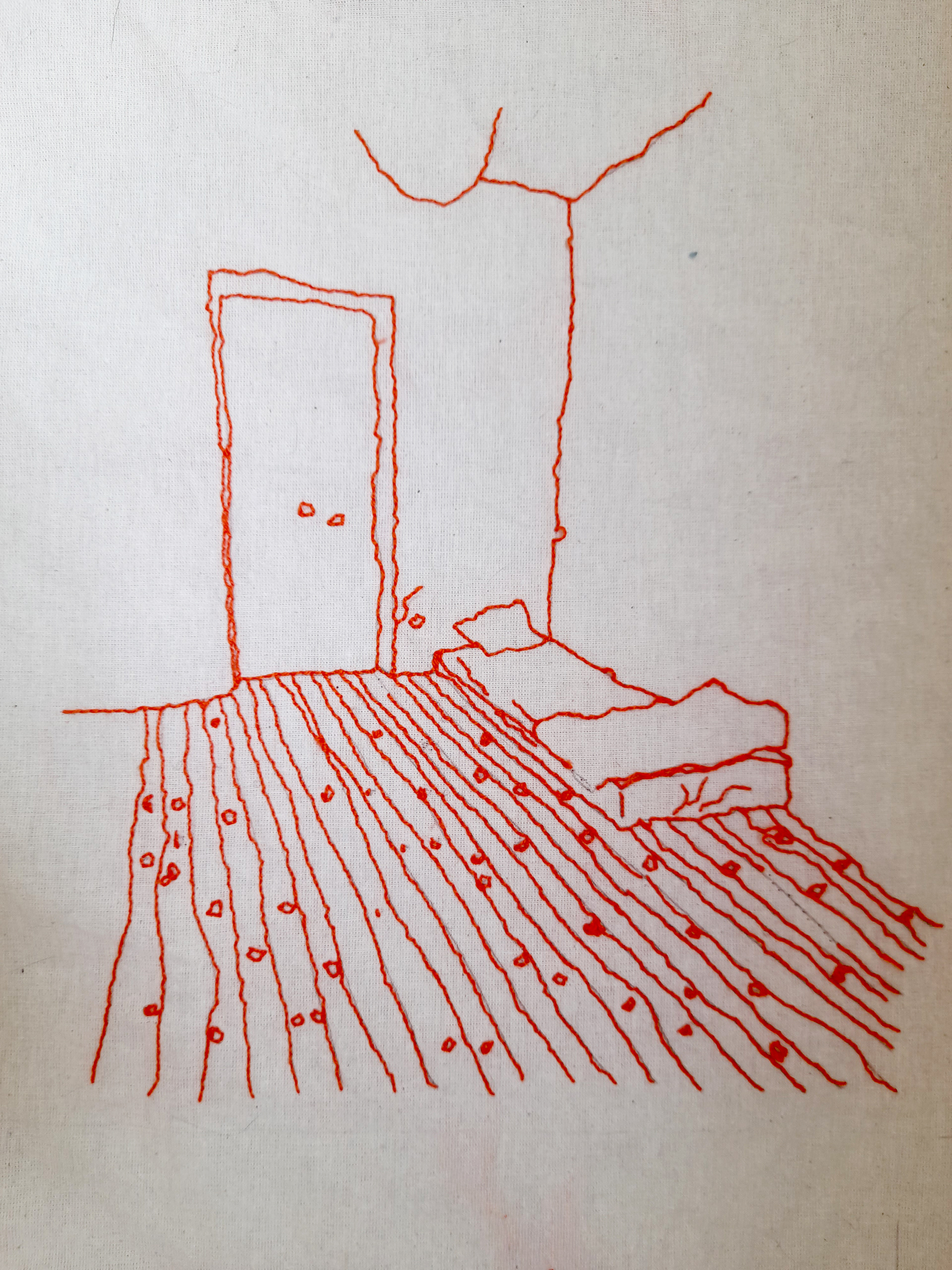

While the front illustrates a defined space in time, the back reveals what is hidden: the raw, unorganized accumulation of feelings. It serves as a reminder that memory is not just a visual record, but a complex emotional structure (front and back).